
How Professional Uniforms Help Build Customer Trust
First impressions matter more than ever. Walk into a hotel, salon, retail shop, or hospital, and you size up the brand almost immediately. How things look and feel shapes your perception—and professional uniforms play a bigger role in that than most businesses realise.
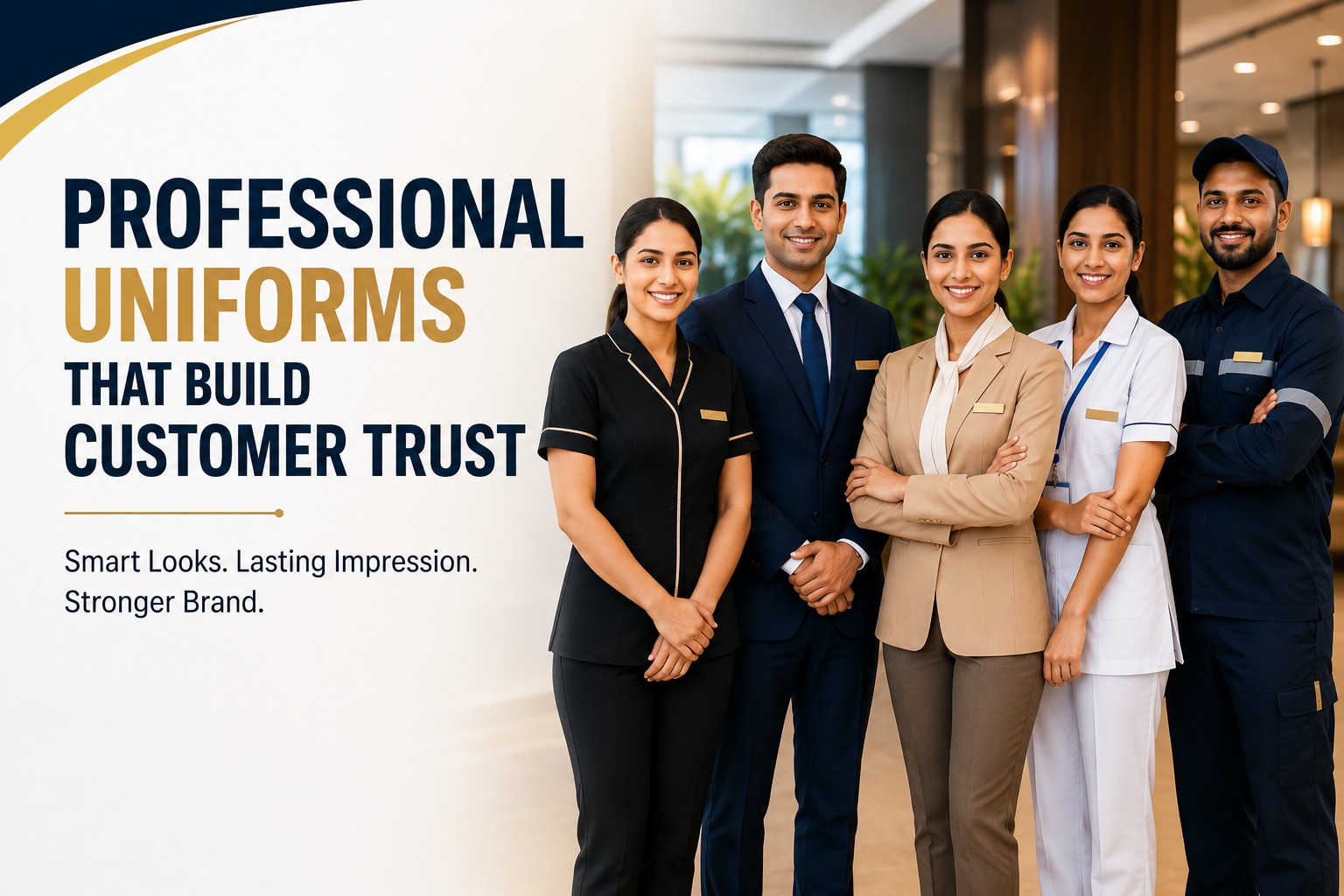
A sharp uniform does more than make staff look put together. It builds customer trust, strengthens team cohesion, and helps a brand stand out. That’s why businesses across industries—hospitality, corporate, healthcare, industrial, and retail—are investing in workwear that balances style, comfort, and practicality.
Why Professional Uniforms Matter for Brand Trust
People tend to trust businesses that look organised and consistent. When every employee wears a uniform, customers can identify staff at a glance—reducing confusion and projecting a sense of order. Clean, well-fitted attire signals reliability from the very first interaction.
Professional uniforms help businesses:
- Make a strong first impression
- Build customer confidence
- Shape a memorable brand image
- Encourage employee accountability
- Raise the overall bar for professionalism
Luxury hotels, corporate offices, and premium salons all treat uniforms as a brand investment—not just a dress code. In a competitive market, the right uniform helps businesses stand out and earn trust.
The Growing Demand for Thoughtful Corporate Uniform Design
Businesses today want more than basic workwear. They’re putting real thought—and budget—into uniforms that reflect their brand’s identity and values. Key priorities in modern corporate uniform design include:
- Sleek, polished aesthetics
- All-day comfort for active roles
- Contemporary tailoring and fit
- Practical details suited to the job
- Custom branding elements that reinforce company identity
A well-designed uniform communicates company culture and creates a lasting impression. It’s no longer just about appearance—practicality and comfort are equally important.
Comfort Is Now a Non-Negotiable Standard
When staff feel comfortable in what they wear, they work better and carry themselves with more confidence. That’s why modern uniforms increasingly use advanced fabrics that breathe, stretch, and hold their shape through long shifts.
The Rise of Stretch Fabric
Jobs in hospitality, healthcare, retail, and industrial settings involve constant movement. Uniforms with stretch fabric accommodate this by:
- Allowing unrestricted movement in any direction
- Reducing fatigue during long shifts
- Eliminating the discomfort of stiff or restrictive materials
- Maintaining shape and appearance through daily use
Comfortable employees interact with customers more positively—and that translates directly into a better brand experience.
Custom Logo Apparel Strengthens Brand Recognition
More businesses are using custom logo apparel to boost visibility and reinforce brand identity. It’s not just about having uniforms—it’s about weaving your brand into every customer interaction. When employees wear clothing that features the company logo, colours, and style, they become walking ambassadors for the brand. Staff are easier to identify, the company’s identity is reinforced, and the business presents a polished, professional image that customers remember.
How Professional Uniforms Improve Employee Confidence
1. Employee well-being gets a lift
Uniforms simplify daily decisions—no stress about what to wear or whether an outfit fits the environment. When employees look sharp, they feel more confident, and that feeling carries through the workday.
2. Confidence supports better performance
When staff feel good in their uniforms, they engage more confidently with customers—and that confidence is noticeable. Employees who feel uncomfortable or self-conscious in their workwear tend to avoid customer interactions, which can affect sales and service quality, particularly in retail. By contrast, staff who feel good in what they wear show up with energy and assurance that customers respond to.
3. Stronger brand engagement
Your team is the living face of your brand. A great uniform amplifies that presence. Whether employees are on the shop floor or out in the field, they represent the company—creating organic brand awareness with every interaction.
4. Customer trust is reinforced
When customers need assistance, a uniform makes it immediately clear who to approach. There’s no awkward guessing about who is staff and who isn’t. This is especially important in healthcare, where professional attire directly affects how patients perceive competence and credibility. Uniforms send a clear, consistent message of professionalism—and that message builds trust.
Why Businesses Choose Uniform Bucket
For businesses that care about presentation and customer experience, choosing the right uniform provider matters. Uniform Bucket offers:
- High-quality, durable fabrics
- Modern designs suited to a range of industries
- Custom logo apparel and branding options
- Comfortable fits built for all-day wear
From hospitality uniforms to industrial workwear, Uniform Bucket helps businesses create professional apparel that reflects their brand—so uniforms are one less thing to worry about.
Frequently Asked Questions
1. Why are professional uniforms important for businesses?
Professional uniforms create a strong first impression, help customers identify staff quickly, and signal that a business takes quality seriously. In sectors like hospitality, retail, and healthcare, this visible professionalism directly influences how customers perceive and trust the brand.
2. How do custom uniforms improve brand recognition?
When employees wear uniforms featuring the company’s logo and brand colours, they become visible extensions of the brand. Consistent, recognisable workwear makes it easier for customers to connect with the business and remember it—especially in high-footfall environments.
3. What fabrics work best for corporate uniforms?
The best fabrics for corporate uniforms are breathable, durable, and easy to maintain. Stretch blends are increasingly popular because they offer comfort during long shifts without sacrificing a professional appearance. The right choice depends on the industry—lightweight, moisture-wicking fabrics suit hospitality roles, while tougher materials are better suited to industrial settings.