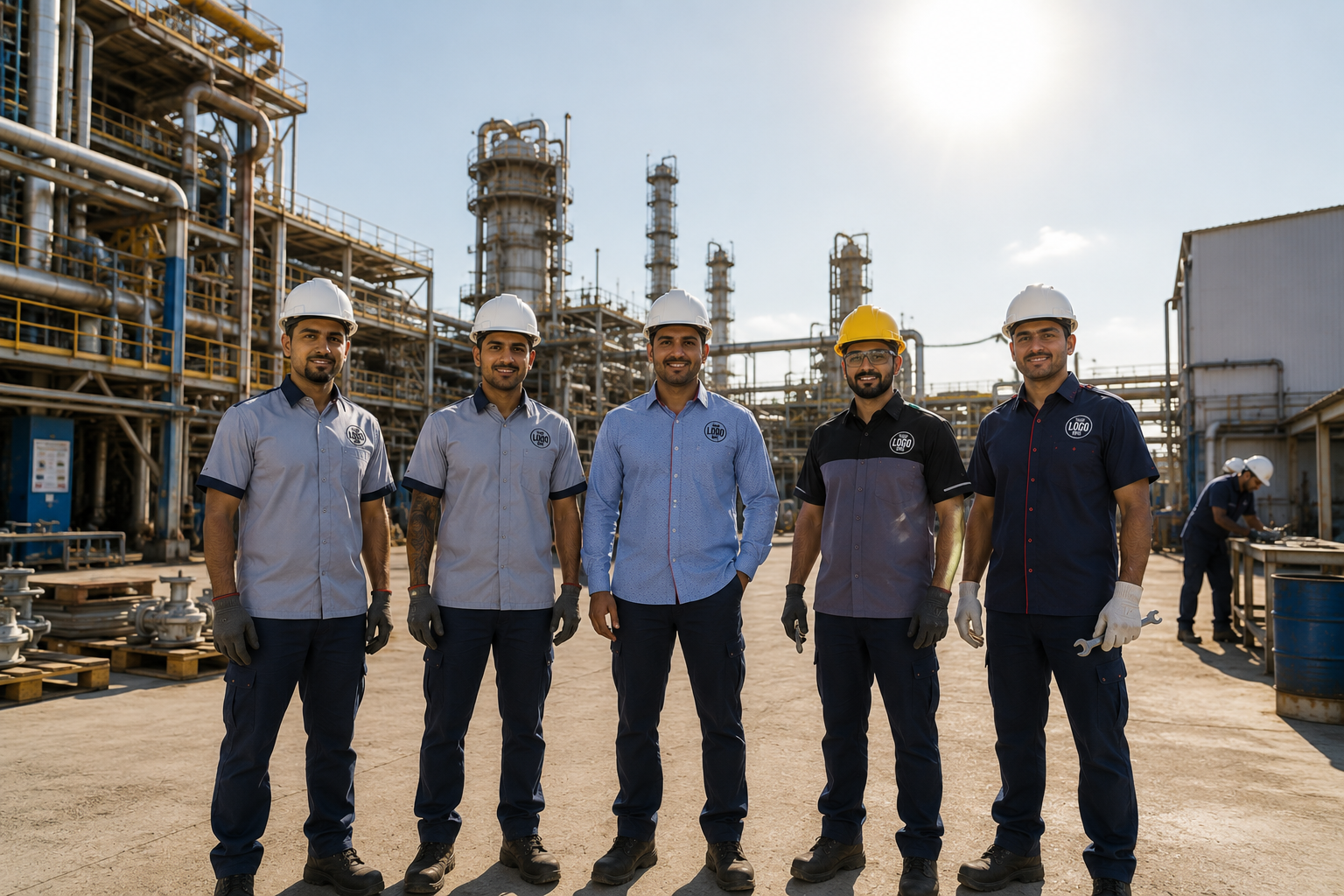

Which Fabric Is Best for Summer Uniforms for Industrial Workers?
When temperatures rise on factory floors, construction sites, and warehouses, the fabric of a worker's uniform can be the difference between productivity and heat exhaustion. Choosing the right breathable workwear fabric isn't just about comfort — it's a safety decision. This guide breaks down every major fabric option for hot-weather industrial settings.
India's industrial workforce faces extreme heat for 5–7 months a year. Whether you're outfitting a manufacturing plant, logistics hub, or outdoor construction crew, a well-chosen summer uniform in the right fabric keeps workers cooler, drier, and safer — while reducing your uniform replacement costs. At UniformBucket.com, we help businesses across India find the right workwear fabric for every season and industry.
Why Fabric Choice Matters in Hot Workplaces
Industrial workers often spend 8–12 hours in physical activity under direct sunlight or in poorly ventilated facilities. Non-breathable fabric traps body heat, accelerates dehydration, and raises the risk of heat-related illness. The right lightweight safety uniform fabric does three things: allows airflow, moves sweat away from skin, and holds up through repeated industrial washing.
Studies show that overheated workers fatigue up to 35% faster. A breathable, moisture-wicking work uniform is not just a perk — it directly protects output quality and worker health.
Top Fabrics for Industrial Summer Uniforms
1. Cotton-Polyester Blend Best Overall
The 65/35 or 60/40 cotton-poly blend is the industry gold standard for hot-weather workwear. It pairs cotton's natural breathability with polyester's durability and faster drying time. Workers stay comfortable through long shifts, and the fabric survives the heavy washing cycles that industrial use demands.
If you're looking for ready-to-order options, explore our Cotton-Polyester Industrial Uniforms — available in bulk with custom logo printing.
Best for: Manufacturing, warehouses, logistics, general factory roles Key benefits: Breathable, durable, wrinkle-resistant, cost-effective at bulk scale
2. 100% Cotton — Natural Comfort Choice
Naturally soft, breathable, and odor-resistant, 100% cotton is a reliable choice for workers not exposed to high-heat hazards or chemicals. It absorbs sweat well and feels gentle on skin during long shifts. The drawback is that it holds onto moisture and dries slowly, which can feel uncomfortable on particularly hot days.
3. Performance Polyester — High-Wicking Option
Modern performance polyester with moisture-wicking treatment moves sweat to the fabric's outer surface for rapid evaporation. This keeps workers dry even during high-intensity physical activity. Unlike standard polyester, which can feel hot and stuffy, performance polyester is engineered specifically for active, demanding roles.
4. FR Cotton / Nomex — Specialized Safety Fabric
For oil, gas, electrical, and welding workers, flame-resistant (FR) fabric is not optional — it's a safety and compliance requirement. FR cotton retains reasonable breathability while meeting IS/EN safety standards. Nomex is a synthetic FR fiber used in higher-risk environments. Both must be inspected seasonally for wear of the FR treatment.
Best for: Petrochemical plants, electrical utilities, welding, oil and gas sites Key benefits: Flame-resistant, safety-certified, durable, long-lasting protection
5. Linen / Linen Blend — Ultra-Breathable for Low-Activity Roles
Linen is one of the most breathable natural fabrics available, making it excellent for outdoor roles with lower physical demand. However, it creases easily, has low durability under heavy industrial use, and does not hold up well to repeated industrial washing cycles.
Best for: Outdoor supervisory roles, site managers, hospitality-adjacent positions Key benefits: Ultra-breathable, lightweight, natural feel
6. Modal / Bamboo Blend — Soft and Sustainable
Modal and bamboo blends are exceptionally soft with natural moisture management properties. They are machine-washable, hold color well, and are ideal where hygiene and comfort are priorities. Not built for heavy industrial stress, but perfect for roles that require a professional appearance.
Best for: Food processing, healthcare support, hospitality, light assembly
Key benefits: Soft, moisture-wicking, eco-friendly, color-fast
Fabric Comparison at a Glance
How to Choose the Right Fabric by Industry
Manufacturing & Warehouse: Go with a 65/35 cotton-polyester blend at 150–180 GSM. It handles repetitive movement, survives frequent washing, and keeps workers cool during long shifts. A well-chosen summer uniform in this blend can reduce laundry frequency and long-term replacement costs significantly.
Construction & Outdoor Work: Choose performance polyester with UV-resistant treatment or a heavy-duty cotton blend. Light colors (white, khaki) reflect solar radiation and can reduce surface temperature by 5–7°F compared to dark fabrics in direct sunlight.
Oil, Gas & Electrical: FR cotton or Nomex is non-negotiable for safety compliance. These specialized fabrics for summer uniforms must meet IS/EN standards and should be inspected at the start of every season for any wear of the FR treatment finish.
Food Processing & Hospitality: Modal or bamboo blends offer superior softness and hygiene-friendly moisture management. They hold color well through repeated washing — important for brand-consistent industrial workwear across large teams.
What GSM Should a Summer Industrial Uniform Be?
GSM (grams per square metre) directly impacts how a summer uniform feels and performs in heat. For industrial summer workwear, 100–180 GSM is the sweet spot — light enough to stay cool, yet heavy enough to withstand physical work and washing. Anything above 200 GSM retains too much heat for outdoor or factory floor use during Indian summers.
Additional Features to Look For
Beyond fabric type, look for these performance features in any hot-weather work uniform:
- Mesh ventilation panels — underarm or back inserts for extra airflow during physical activity
- Anti-odor treatment — silver-ion or bamboo-based finishes that control bacterial growth
- UPF 30+ rating — essential for outdoor and rooftop workers exposed to direct sunlight
- Reflective tape compatibility — ensure fabric holds tape adhesive for high-visibility safety requirements
- Colour fastness rating — prevents fading after repeated washing in hard water conditions
Final Thoughts
For most industrial settings across India, the 65/35 cotton-polyester blend at 150 GSM is the most balanced choice for a summer uniform. It checks every box: breathable, durable, easy to maintain, and affordable at scale. If your workforce operates in hazardous heat zones, upgrade to FR cotton or Nomex to meet safety compliance requirements.
Frequently Asked Questions
Q1. Which fabric is best for industrial workers in summer?
Cotton-polyester blends (65/35 or 60/40) are best for most industrial workers — they combine breathability, moisture-wicking, and durability. For high-heat or flame-exposed roles, FR cotton or Nomex is the standard safety choice.
Q2. Is 100% cotton good for industrial uniforms in hot weather?
Yes for comfort and breathability, but 100% cotton absorbs sweat and dries slowly. For industrial use, a cotton-polyester blend offers better durability, faster drying, and is easier to maintain across multiple wash cycles.
Q3. What is moisture-wicking fabric and why does it matter for workwear?
Moisture-wicking fabrics pull sweat away from the skin to the fabric's outer surface where it evaporates quickly. This keeps workers dry and reduces heat stress — critical for safety and productivity during long industrial shifts in hot environments.
Q4. Are polyester uniforms suitable for summer?
Standard polyester can feel hot and trap heat. However, performance polyester with a moisture-wicking finish works well even in summer. Polyester blends are durable, wrinkle-resistant, and cost-effective — making them a popular choice for bulk uniform procurement.
Q5. What GSM is best for summer industrial uniforms?
100–180 GSM is ideal for summer industrial uniforms. This range is lightweight enough to stay cool but sturdy enough to handle the demands of physical work and frequent industrial washing.
Q6. What color should industrial summer uniforms be?
Light colors — white, light grey, khaki, and light blue — reflect sunlight and can keep the fabric surface 5–7°F cooler than dark shades. If your brand requires dark colors, offset this with lighter-weight fabric or vented construction.
Q7. How often should industrial summer uniforms be replaced?
For daily use with regular washing, quality cotton-polyester blend uniforms typically last 12–18 months. Inspect uniforms at the start of each summer — if moisture-wicking performance has declined or fabric has thinned, it's time to refresh your stock.
Q8. Where can I order bulk summer uniforms for my industrial team in India?
You can order high-quality, bulk industrial workwear directly from UniformBucket.com. We offer custom logo printing, certified FR options, moisture-wicking fabrics, and pan-India delivery — with flexible MOQ for businesses of all sizes.